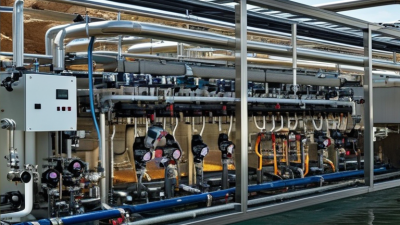


China’s commercial water-treatment industry has become a major sourcing hub for hotels, factories, hospitals, and food-processing facilities. The need is substantial. The WHO and UNICEF Joint Monitoring Programme reported that 2.2 billion people lacked safely managed drinking water in 2022. This pressure is increasing demand for dependable commercial RO equipment, not simply low-cost machines.
This guide examines China’s best Commercial Ro Water System manufacturers through practical criteria. These include permeate flow, recovery rate, feed-water testing, membrane protection, energy use, and after-sales support. A serious supplier should explain each value clearly. For example, a factory may require 10,000 litres per hour, while a hotel may need compact skid-mounted equipment. The difference matters.
Industry research also supports careful evaluation. Grand View Research identifies expanding water and wastewater treatment demand worldwide, driven by industrial growth and stricter water-quality expectations. The International Organization for Standardization provides quality-management guidance through ISO 9001, while NSF/ANSI 58 is widely referenced for reverse-osmosis drinking-water components. Certifications still need verification. A logo alone proves little. Factory audits, test records, component traceability, and commissioning experience provide stronger evidence. China has excellent manufacturers, but quality is not uniform. That is the uncomfortable part. Some catalogues promise impressive recovery rates without showing operating conditions, fouling controls, or long-term performance. Readers should compare documented results rather than polished claims. This overview offers a practical starting point for identifying capable Chinese suppliers and avoiding costly procurement mistakes.
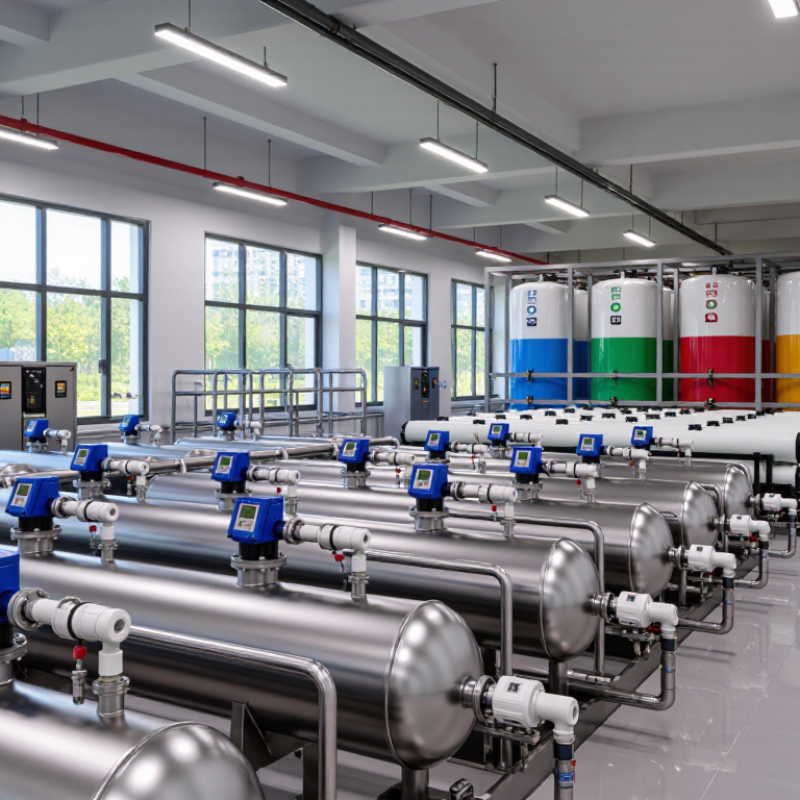
Commercial reverse osmosis (RO) systems remove dissolved salts, metals, and many impurities from water. They use pressure to push water through a semi-permeable membrane. Clean water passes through, while concentrated wastewater leaves separately.
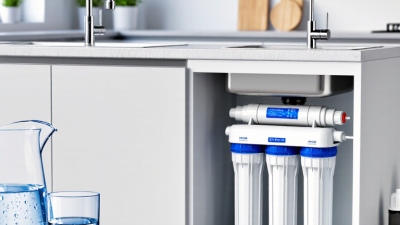
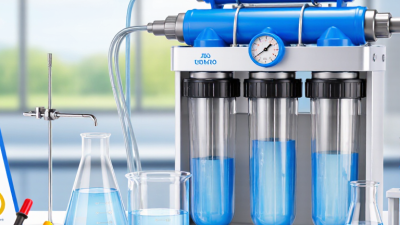
These systems support restaurants, hotels, hospitals, laboratories, factories, and food-processing sites. Their core components include pretreatment filters, a high-pressure pump, RO membranes, flow meters, storage tanks, and control panels. Pretreatment matters greatly. Sediment and carbon filters protect membranes from clogging and chemical damage. In real installations, poor water testing often causes avoidable maintenance problems. A system may look powerful, yet perform badly with unsuitable pressure or neglected filters. Reliable manufacturers should provide water analysis, recovery-rate data, installation guidance, and clear replacement schedules. Independent testing records also improve confidence.
Tips: Test feed water before choosing equipment. Check hardness, iron, chlorine, and microbial risks. Match capacity with peak demand, not average use. Keep a service log. Small oversights become expensive later. Membranes also need correct cleaning procedures, because aggressive treatment can shorten their working life. Local regulations, discharge limits, and operator safety requirements should guide the final design.
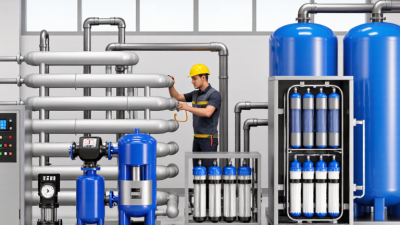
Commercial reverse osmosis systems use pretreatment, a high-pressure pump, RO membranes, and post-treatment to reduce dissolved salts and other contaminants. The chart shows representative removal values commonly associated with well-operated RO membranes; actual performance varies with feed-water quality, pressure, temperature, membrane condition, and system design.
Typical applications: drinking-water production, food and beverage processing, pharmaceutical manufacturing, laboratory water preparation, boiler feedwater, and industrial process-water treatment.
Choosing Chinese commercial RO system manufacturers requires more than comparing quotations. The right evaluation starts with verified engineering data and site experience. The WHO and UNICEF Joint Monitoring Programme reported that 2.2 billion people lacked safely managed drinking water in 2022. This pressure makes reliable treatment design essential, not optional.
Check the manufacturer’s membrane flux, recovery rate, energy use, and pretreatment plan. Ask for test records from water sources similar to yours. A factory should explain how it controls scaling, fouling, microbial risks, and pressure changes. ISO 9001 supports process consistency, but it does not prove purification performance. Request relevant product testing, material traceability, and compliance documents for your target market. For commercial drinking-water equipment, independent testing against applicable NSF/ANSI standards can add confidence. The Global Water Intelligence market analysis also highlights rising demand for efficient desalination and water reuse, making energy consumption a practical purchasing factor. A low initial price may conceal higher maintenance costs. That deserves a second look.
Tips: Require a pilot test before large orders. Compare total cost over five years, not only equipment price. Inspect welds, electrical cabinets, pumps, and spare-parts storage personally or through an independent auditor. Ask for customer references with similar feedwater. Be careful with impressive recovery claims; actual results depend on temperature, salinity, and pretreatment. Even experienced buyers sometimes overlook operator training. That mistake is expensive.
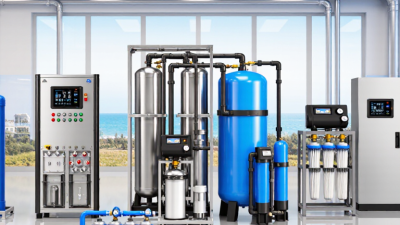
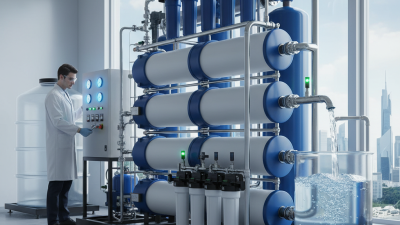
China’s commercial RO manufacturers generally fall into four practical types: complete-system integrators, membrane module specialists, OEM factories, and application-focused engineering suppliers. System integrators build skid-mounted units with pumps, pretreatment, controls, and storage tanks. Membrane specialists concentrate on pressure vessels and filtration performance. OEM factories often produce private-label equipment for overseas distributors. Engineering suppliers design units for hotels, clinics, food plants, and small factories.
Demand is not theoretical. The WHO/UNICEF Joint Monitoring Programme reported that 2.2 billion people lacked safely managed drinking water in 2022. China’s 2023 Water Resources Bulletin recorded total water use of about 590.7 billion cubic metres. These figures explain the need for compact, reliable treatment equipment, especially where municipal supply quality changes by season. A useful factory should provide recovery-rate tests, membrane-flux records, electrical documentation, and clear replacement schedules.
Look closely at operating evidence. A 10 m³/hour system may perform differently under high hardness, unstable pressure, or warm feedwater. The Global Water Intelligence Desalination and Water Reuse industry reports repeatedly identify energy use, pretreatment, and concentrate management as major cost factors. Yet catalog claims can be overly optimistic. I have seen buyers compare pump capacity while ignoring feedwater analysis. That is a mistake. Ask for a pilot test, maintenance records, and third-party material certificates. Small details matter.
When evaluating China’s best commercial RO water system manufacturers, certification is only the starting point. A credible factory should map its design to NSF/ANSI 58, ISO 9001, and applicable pressure-vessel requirements. NSF/ANSI 58 evaluates reduction claims, structural integrity, materials, recovery, and efficiency. It does not make every installation risk-free. Feedwater changes everything.
The World Health Organization’s 2022 Guidelines recommend risk-based water safety management, not certificate collecting. Request a documented hazard analysis, incoming membrane inspection, pressure-test records, and lot-level traceability. Technicians should record feed conductivity, permeate conductivity, temperature, pressure, and recovery. A practical benchmark is stable salt rejection across repeated runs, not one impressive laboratory result. EPA WaterSense materials show why efficiency matters: conventional point-of-use RO units may discharge several gallons for each gallon produced, while better designs reduce that burden. Commercial buyers should demand a stated concentrate-to-product ratio under defined conditions.
Look closely at quality control. Stainless steel welds should be visually checked, passivation documented, and piping flushed before shipment. Control panels need alarm testing, sensor calibration, and clear fail-safe responses. Factory acceptance tests should use recorded data, not photographs. That sounds obvious. It is often missed. Ask for service records from comparable flow rates, membrane replacement intervals, and commissioning support. ISO 9001 can improve process discipline, but it cannot replace independent performance testing. A manufacturer earns trust when it discloses limits, including low-pressure operation, high silica, temperature swings, and cleaning chemicals. Some specifications remain vague. That deserves a second question.
| Evaluation Dimension | Relevant Standard or Requirement | What a Qualified Manufacturer Should Demonstrate | Verification Evidence |
|---|---|---|---|
| Quality management | ISO 9001:2015 or an equivalent documented quality-management system | Controlled purchasing, traceable production records, corrective-action procedures, calibrated inspection equipment, and documented final release criteria | Valid certificate, certification scope, certificate number, issuing body, and surveillance status |
| Environmental management | ISO 14001:2015 | Controls for chemical handling, wastewater, packaging, energy use, and environmental legal compliance | Certificate scope, environmental procedures, waste records, and applicable local permits |
| Occupational safety | ISO 45001:2018 where applicable | Risk assessments, worker training, machine safeguards, chemical safety, and incident-control procedures | Current certificate and evidence that the certificate covers the manufacturing site |
| Drinking-water application | China GB 5749-2022 for drinking-water quality, when the system is intended for treated drinking water | Performance claims linked to the intended feed-water quality, treatment process, disinfection method, and end-use requirements | Laboratory water-quality reports and a clearly defined application scope; compliance is not automatically proven by an ISO certificate |
| Food-contact materials | Applicable food-contact requirements, including GB 4806 series where relevant to the Chinese market | Material declarations for tanks, housings, tubing, seals, fittings, and other wetted parts | Material certificates, migration-test reports, supplier declarations, and batch traceability |
| RO membrane performance | Documented membrane test method and operating conditions; ASTM D4194 may be used for laboratory evaluation of water-treatment membrane performance | Defined feed-water temperature, pressure, total dissolved solids, recovery, permeate flow, and salt-rejection conditions | Factory test report showing actual test conditions; advertised rejection values should not be treated as universal field results |
| Typical RO performance range | Commercial RO membrane systems commonly specify approximately 95%–99% salt rejection, depending on membrane type and test conditions | The manufacturer should state whether the figure is for a new membrane, a single element, or the complete system | Product datasheet, witnessed performance test, and operating manual with limits for pressure, temperature, recovery, and feed-water chemistry |
| Pretreatment design | System must be selected according to feed-water analysis and membrane-fouling risks | Appropriate sediment filtration, activated carbon, softening or antiscalant dosing, cartridge filtration, and dechlorination where required | Feed-water analysis, process-flow diagram, pretreatment sizing calculations, and chemical compatibility review |
| Pressure and flow control | Design values must remain within the limits of the selected membrane, pump, pressure vessel, and piping components | Pressure gauges, low-pressure protection, high-pressure protection, flow meters, automatic shutdown, and adjustable operating controls | Piping-and-instrumentation diagram, component datasheets, pressure test records, and control-panel functional test |
| Electrical and control safety | Applicable electrical-safety and machinery requirements for the destination market; CE marking may be relevant for certain European-market products | Correct enclosure rating, grounding, overload protection, emergency isolation, clear wiring identification, and safe control logic | Electrical schematic, bill of materials, insulation and grounding test records, and destination-market conformity documentation |
| Fabrication and materials | Material selection must match pressure, corrosion, temperature, and water-quality requirements | Suitable stainless steel, engineering plastics, elastomers, welds, brackets, and hygienic internal surfaces for the intended service | Material certificates, weld-inspection records where applicable, surface-finish requirements, and pressure-test results |
| Factory acceptance testing | FAT criteria should be agreed before production and linked to the approved technical specification | Leak testing, pump rotation, electrical checks, alarm simulation, flow verification, pressure verification, and basic water-quality testing | Signed FAT protocol, calibration records, nonconformance log, corrective-action report, and customer approval |
| Documentation and traceability | Technical documentation should identify the exact delivered configuration | Serial numbers, component list, spare-parts list, manuals, wiring diagrams, maintenance intervals, and commissioning instructions | As-built drawings, operating and maintenance manual, inspection checklist, and component certificates |
| After-sales capability | Support commitments should be defined contractually rather than inferred from marketing claims | Commissioning support, troubleshooting response, operator training, spare-parts availability, warranty terms, and preventive-maintenance guidance | Service-level agreement, warranty policy, spare-parts lead times, training records, and references for comparable installations without relying solely on testimonials |
Note: Certification applicability depends on the product configuration, intended use, destination market, and installation conditions. Performance values should always be verified against the manufacturer’s test conditions and the actual feed-water analysis.
Selecting a suitable Chinese commercial RO system supplier starts with your water, not a product catalog. Ask the engineering team to review source-water analysis, daily demand, operating hours, and required recovery. They should explain pretreatment clearly, including sand filtration, carbon filtration, softening, or ultrafiltration. Request the membrane model, pump curve, material specifications, electrical drawings, and expected output quality. Vague promises are a warning sign. “Pure water” needs measurable limits.
Tips: Compare at least three suppliers. Request factory videos or an on-site audit. Check whether technicians perform a factory acceptance test before shipment. Ask for test records, spare-parts lists, manuals, and commissioning procedures. Speak with recent customers in similar industries. Keep records.
Supplier reliability also depends on after-sales support. Confirm response times, remote troubleshooting, installation guidance, warranty terms, and technician availability. The supplier should understand local electrical conditions and water-treatment practices. A low quotation may hide weak pumps, limited controls, or expensive replacement parts. That happened in one project review. The initial comparison focused too heavily on price. A better assessment considers five-year operating costs, energy use, membrane replacement, and maintenance access. Ask difficult questions early. That's practical risk control.