Which Is the Best Osmosis Filter in China?
Choosing the best Osmosis Filter in China is not simply a matter of comparing prices or counting filtration stages. A reliable choice must match local water conditions, household demand, installation space, and maintenance habits. In Shanghai, for example, municipal water may be safe but still contain chlorine, scale-forming minerals, or unpleasant taste. In rural areas, well water can present different risks. The right system begins with testing.
Dr. Joseph Cotruvo, a respected water-quality and treatment expert, has stated, “Reverse osmosis is a powerful barrier, but it is not a substitute for good operation and maintenance.” This principle deserves attention. Even an advanced Osmosis Filter can perform poorly with neglected membranes, expired carbon cartridges, or incorrect water pressure. Small details matter. A cloudy storage tank matters. A dripping connection matters.
This guide compares Chinese Osmosis Filter options through practical and technical criteria. It considers membrane quality, contaminant reduction, flow rate, wastewater ratio, noise, replacement costs, and after-sales support. Certifications and independent laboratory results also deserve more weight than impressive advertising. Some manufacturers publish limited performance data. That should encourage careful questions, not immediate rejection.
Real experience often exposes weaknesses that brochures hide. A filter may produce clear water, yet its annual maintenance cost can surprise buyers. Another model may have slower output but stronger long-term reliability. There is no perfect machine. The best choice depends on verified performance, honest servicing, and the water entering your home. That is where this comparison begins.
Define Reverse Osmosis Filters and Their 0.0001-Micron Membrane Structure
Which Is the Best Osmosis Filter in China?
Define Reverse Osmosis Filters and Their 0.0001-Micron Membrane Structure
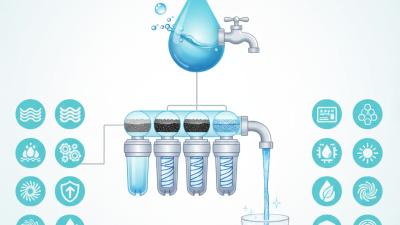
Reverse osmosis filters push water through a semipermeable membrane under pressure. Their commonly quoted pore size is 0.0001 micron. This is far smaller than most bacteria and suspended particles. However, pore size alone cannot prove actual filtration performance.
Modern membranes usually use a thin-film composite structure. A dense polyamide layer sits above a porous support layer. Water molecules pass through the active layer, while many dissolved salts, metals, nitrate, and microorganisms remain behind. The World Health Organization’s Guidelines for Drinking-water Quality identifies arsenic, nitrate, and microbial contamination as important health concerns. Removal rates still depend on pressure, temperature, feed-water chemistry, and membrane condition. A damaged seal can defeat impressive specifications. That detail is often ignored.
The U.S. Environmental Protection Agency reports that conventional point-of-use reverse osmosis systems may produce several gallons of reject water per gallon treated. High-efficiency designs can reduce this ratio to about 2.3:1. Performance testing matters more than attractive packaging. I have seen installations where poor inlet pressure caused slow flow and inconsistent results. Real homes are less perfect than laboratory sheets.
Tips: Check independent test reports, membrane replacement dates, inlet pressure, and post-filter quality. Test treated water for total dissolved solids, nitrate, or arsenic when local risks justify it. Do not treat 0.0001 micron as a guarantee. It is only one technical specification.
Compare Filtration Performance: RO Systems Remove About 90–99% of Dissolved Salts
Which Is the Best Osmosis Filter in China?
Compare Filtration Performance: RO Systems Remove About 90–99% of Dissolved Salts
Choosing an osmosis filter in China should begin with measurable rejection performance. Reverse osmosis systems commonly remove about 90–99% of dissolved salts under suitable conditions. This includes many ions that contribute to hardness, high conductivity, and unpleasant mineral tastes. Actual results depend on water pressure, temperature, membrane condition, and feedwater quality. A system tested in a laboratory may perform differently at home. Tap water can also vary between cities, buildings, and seasons.
Look for independent test data, clear replacement schedules, and a properly rated membrane. A TDS meter can show change, but it cannot identify every contaminant. That limitation matters. I would also check the waste-water ratio, flow rate, and filter housing quality. A neglected pre-filter may reduce membrane life quickly. In practical use, cloudy inlet water, old pipes, or low pressure can weaken performance. The “best” system is not always the one with the highest advertised percentage.
Tips: Test the incoming and filtered water at the same temperature. Record readings before installation and after several weeks. Replace sediment and carbon filters when advised, even if the water still looks clear. Inspect for leaks around fittings. Small details matter. A professional water test is wiser when salt levels are unusually high or the source is uncertain.
Evaluate Chinese Compliance Through GB 5749-2022 and NSF/ANSI 58 Standards
The best osmosis filter in China should be judged against two different benchmarks. GB 5749-2022 defines China’s drinking-water requirements, covering microbiological, toxicological, chemical, sensory, and radiological indicators. It does not automatically certify a household filter. The system must show that treated water meets relevant limits under real operating conditions.
NSF/ANSI 58 evaluates reverse-osmosis systems through contaminant-reduction claims, material safety, structural integrity, and recovery performance. Its requirements are not identical to GB 5749-2022. Therefore, a strong Chinese compliance review needs both datasets: laboratory results against applicable GB limits and an independent NSF/ANSI 58 evaluation. That distinction matters.
The WHO and UNICEF Joint Monitoring Programme reported that 2.2 billion people lacked safely managed drinking water in 2022. This figure shows why point-of-use treatment requires careful verification, not attractive specifications. Check the tested influent quality, pressure, temperature, flow rate, replacement interval, and recovery ratio. Ask whether testing covered the complete assembled unit, including tubing and storage tanks.
I would not treat a certificate as final proof. Documents can be incomplete, and household water conditions vary sharply between cities. A practical assessment should compare inlet and outlet samples, record membrane age, and repeat testing after several months. Chinese compliance is stronger when GB results, NSF/ANSI 58 evidence, production quality controls, and traceable third-party reports support the same claims. Even then, performance may decline quietly without maintenance.
Which Is the Best Osmosis Filter in China?
Evaluating Chinese compliance through GB 5749-2022 and NSF/ANSI 58
Selected GB 5749-2022 Maximum Limits
Values are shown in the units specified by GB 5749-2022. Because the limits use different units, the bars should be compared by contaminant category rather than by bar length alone.
GB 5749-2022
A mandatory Chinese drinking-water quality standard. A reverse osmosis system intended for use in China should be verified against the applicable finished-water limits, including heavy metals, nitrate, fluoride, turbidity, and total dissolved solids.
NSF/ANSI 58
A product-performance and structural-safety standard for reverse osmosis systems. Certification is claim-specific, so the evaluation should confirm the exact contaminant-reduction claims and test conditions rather than assuming that every certified system covers every contaminant.
Sources: GB 5749-2022, Standard for Drinking Water Quality; NSF/ANSI 58, Reverse Osmosis Drinking Water Treatment Systems. Always verify the current standard editions and the specific system’s test report before purchase.