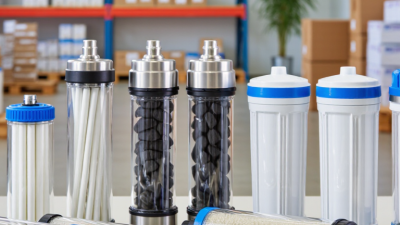


Buying a Drinking Water Filter across borders is not a simple price comparison. Water quality changes by city, season, plumbing system, and household usage. A filter that performs well in Singapore may struggle with hard water in Mexico or sediment in rural Kenya. Global buyers need evidence, not attractive packaging.
Dr. Joseph Cotruvo, a respected drinking-water quality expert and former U.S. Environmental Protection Agency official, has stated, “There is no single treatment system that removes all contaminants.” That principle should guide every purchase. Check the local water report first. Then identify the specific contaminants requiring reduction, such as chlorine, lead, bacteria, or unpleasant taste. Look for independent certification, clear test standards, and published performance data. Marketing language alone is weak evidence.
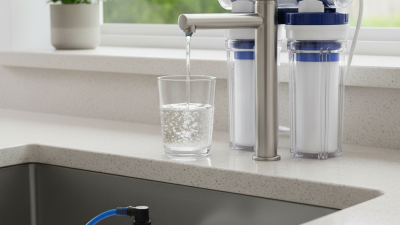
Details matter. Measure the available space beneath the sink. Confirm the inlet size, operating pressure, replacement cartridge cost, and expected service life. A compact filter may fit neatly beside a kettle, yet its cartridge could require frequent replacement. That changes the real cost. Some buyers also overlook local technical support, import requirements, and disposal instructions.
Small mistakes are common. A certified filter can still perform poorly when installed incorrectly or used beyond its rated capacity. Maintenance is not optional. Keep records of installation and cartridge changes. Compare practical performance, not just laboratory claims. These seven buying tips help global buyers choose more carefully, while leaving room for an honest reflection: the most advanced Drinking Water Filter is not always the most suitable one.
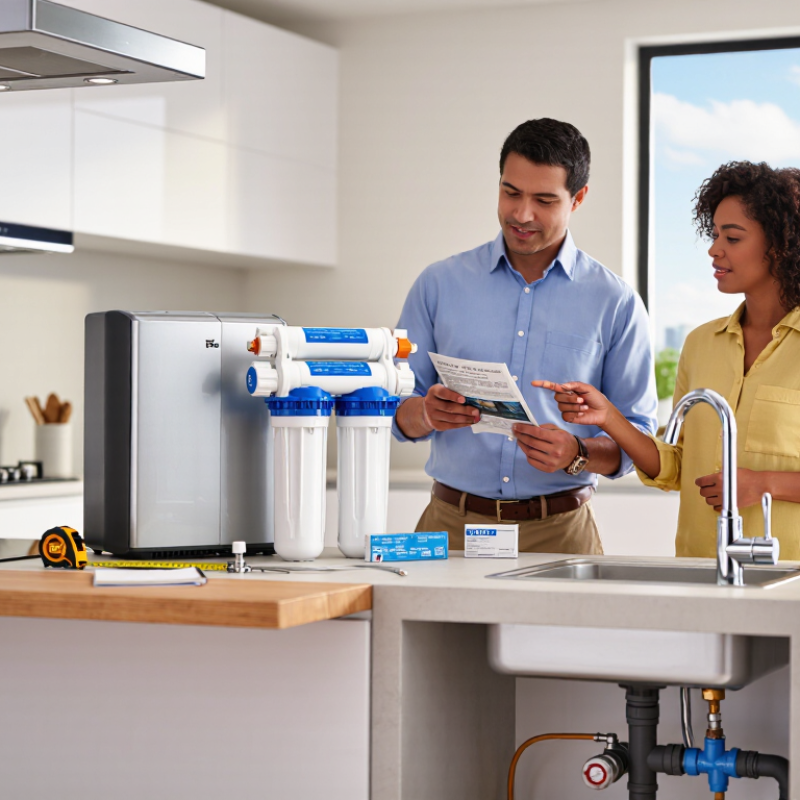
Lead can enter drinking water through older service lines, solder, or household plumbing. Clear water offers no reliable clue. EPA’s 15 µg/L action level is a regulatory benchmark for public water systems, based on samples across the system. It is not a “safe below, unsafe above” boundary for one kitchen tap. Lead exposure is a concern even at low levels, especially for infants and children. A home test can show whether your tap deserves closer attention.
Tips: Use a qualified laboratory and follow its sampling instructions. Ask whether the test requires a first-draw sample after water sits overnight. If results approach or exceed 15 µg/L, contact your water provider or local health department. Choose a filter independently certified for lead reduction, such as under NSF/ANSI 53 or 58. Check the exact model and replacement schedule; a general “water filter” claim is not enough.
Retest after plumbing work or when water conditions change. Run cold water before collecting drinking water if your provider recommends it, but do not treat flushing as a substitute for testing. Filter performance depends on proper installation and timely cartridge changes. That detail is easy to overlook. Keep test reports and replacement dates together, perhaps on a note inside the cabinet. One result is useful, but it may not describe every tap or every day.
Water-filter claims matter only when they identify the contaminant and test standard. NSF/ANSI 42 covers aesthetic effects, such as chlorine taste and odor; it does not establish broad health protection. NSF/ANSI 53 addresses specific health-related contaminants. NSF/ANSI 58 applies to reverse-osmosis systems and their certified reduction claims. NSF/ANSI 401 covers one or more listed emerging compounds, not every newly detected chemical. Read the exact claim. Match it against your water test and local water-quality report, rather than buying by filter type alone.
The WHO/UNICEF Joint Monitoring Programme reported that 2.2 billion people lacked safely managed drinking water in 2022, in its 2023 progress report. That global figure highlights unequal access, but it does not mean every household needs the same filter. Check the exact model and contaminant in an independent certifier’s listing. Verify reduction claims, rated capacity, and replacement intervals. A certification logo alone is not enough. Filters can lose effectiveness when cartridges are overdue, even if water still looks clear. Labels can mislead. I would also question any product page that uses a standard number without naming the contaminants tested; that detail is easy to overlook, even for careful buyers.
| # | Buying Tip | What to Check | Relevant Standard | Practical Buyer Action |
|---|---|---|---|---|
| 1 | Match each claim to a specific contaminant. | A standard number alone does not show that a product reduces every contaminant covered by that standard. Look for the exact contaminant and reduction claim in the product’s certification listing or performance sheet. | NSF/ANSI 42, 53, 58, and 401 | Ask for documentation that identifies the model, the certified claims, and any stated operating conditions. |
| 2 | Use Standard 42 for aesthetic claims. | NSF/ANSI 42 covers specified aesthetic effects, such as chlorine taste and odor or particular particulate-reduction claims. The exact claim depends on the product’s certification. | NSF/ANSI 42 | If the goal is better taste or odor, verify that the product is listed for the relevant reduction claim rather than relying on general “purification” wording. |
| 3 | Check Standard 53 for health-effects claims. | NSF/ANSI 53 addresses specified health effects. Depending on the certified product claims, these may include reductions for contaminants such as lead or certain cysts; coverage is not automatic for every product tested to the standard. | NSF/ANSI 53 | Compare the exact contaminant claim with local water-quality information and confirm the product listing covers that claim. |
| 4 | Understand what Standard 58 says about reverse osmosis. | NSF/ANSI 58 applies to reverse-osmosis drinking-water treatment systems. A system’s certified claims may include total dissolved solids (TDS) reduction and other specific claims, but not every system has the same claims. | NSF/ANSI 58 | Check the model’s certified performance claims, rated capacity, required water pressure, and any stated feed-water limits. |
| 5 | Look for specific Standard 401 claims when relevant. | NSF/ANSI 401 covers specified incidental or emerging compounds. Certification applies to listed compounds and claims, not to every pharmaceutical, pesticide, or other chemical in this broad category. | NSF/ANSI 401 | Request the current certification listing and check whether the particular compound of concern is included. |
| 6 | Verify the exact model and the certifier. | Certification and performance claims can vary between models in the same product range. A test report, a statement that a product uses a tested material, and product certification are not interchangeable. | All four standards | Search the certifier’s current public directory using the complete model identifier and confirm the standard and claims shown there. |
| 7 | Check capacity, replacement needs, and local requirements. | Rated capacity and replacement intervals are product-specific and may depend on water quality and usage. NSF/ANSI claims do not replace local drinking-water regulations or installation requirements. | Product documentation and local regulations | Compare replacement-part availability, maintenance instructions, connection requirements, and applicable rules in the destination market. |
For global buyers, compare flow rate, cartridge capacity, and replacement timing together. A filter delivering 1.5 liters per minute may feel fast at the tap, yet its rated capacity still sets the service interval. The WHO/UNICEF Joint Monitoring Programme reported that 2.2 billion people lacked safely managed drinking water in 2022. That figure signals varied water conditions; it does not predict which contaminants a specific filter can reduce. Check independent performance claims and the test conditions behind them.
NSF/ANSI 42 and 53 address different types of reduction claims, so verify the relevant certification for your intended use. Treat rated capacity as a tested benchmark, not a promise for every household. Sediment, water pressure, and daily demand can change performance.
For example, 12 liters used each day from a 1,200-liter cartridge suggests about 100 days on paper. Real life can differ. I would not plan replacement by calendar alone.
Tip:
Compare liters per cartridge with your household’s daily use, then check the stated flow rate at operating pressure. Note the replacement trigger, too: a capacity rating, a time limit, or a noticeable drop in flow. Keep a simple usage log; estimates are imperfect, but they beat guessing.
7 Drinking Water Filter Buying Tips for Global Buyers
An impressive 99.99% figure is useful only when its test conditions are clear. Ask which microbes were tested and whether results came from an independent, recognized certification body. Check the exact filter model and cartridge configuration. Small differences matter. Read the certificate itself, not just a product page.
Confirm that the documents show at least 99.99% reduction for named organisms under stated flow, pressure, and water conditions. Look for test duration and rated capacity, too. An initial lab result may not reflect performance near the cartridge’s end of life. That distinction is easy to miss. I would not treat a neat headline as proof; paperwork can still leave gaps.
For a global purchase, request the complete test report and verify that its scope matches your intended use. Check whether the stated performance applies to the whole filter or only one component. Also ask how installation and timely cartridge replacement affect results. Keep the records with your purchasing documents. If a supplier cannot explain the test setup in plain language, pause and ask for clarification. A precise claim deserves precise evidence.
This chart shows the mathematical relationship between reduction percentages and organisms remaining from an illustrative starting count of 100,000; it is not product test data. When assessing a 99.99% claim, check the certification report for the tested organism, protocol, operating conditions, and exact filter model.
For global buyers, the purchase price is only the opening figure. Purchase price misleads. Calculate the total ownership cost over five years before comparing drinking water filters. Include replacement cartridges, maintenance parts, installation, electricity, and local service fees. Ask how often each filter needs changing under your household’s water conditions. Hard water, sediment, and high daily use can shorten service life.
Water waste matters. Some purification systems discharge water during filtration, and the ratio may vary by pressure and temperature. Record the expected waste volume per litre of drinking water. Then multiply it by local water and wastewater rates. For example, a system producing one litre while discarding two litres may create a noticeable bill over five years. This calculation is often missed in product comparisons.
Build a simple spreadsheet using annual drinking-water demand. Add the filter price multiplied by required replacements, plus installation and five years of water waste. Include a contingency allowance for damaged housings or unexpected servicing. It is not perfect. Real replacement intervals can differ from laboratory claims. Check test methods, independent performance reports, warranty conditions, and spare-part availability in your country. A cheaper filter may become expensive when cartridges are imported, delayed, or difficult to recycle. Ask suppliers for written data, not optimistic estimates. Your local water report should influence the calculation, because removing unnecessary contaminants can increase cost without improving practical safety.