What Is the Best Distilled Water Machine in China?
Choosing the best Distilled Water Machine in China requires more than comparing prices or polished product photos. A dependable machine should produce clear, consistent water for laboratories, clinics, food preparation, or household use. Its heating chamber, condenser, collection container, and safety controls deserve careful attention. Stainless steel construction can improve durability, but material grades and welding quality still need verification.
Practical evaluation should consider output volume, heating time, energy consumption, noise, cleaning access, and replacement parts. A compact countertop unit may suit a small clinic, while a larger automatic model can support regular laboratory demand. Certification documents, factory testing records, and transparent warranty terms also matter. These details often reveal more than a sales slogan. Small details count.
China has many capable manufacturers, yet product quality is not uniform across every supplier. Some listings provide impressive specifications but limited performance evidence. That gap deserves caution. Buyers should request water-quality test results, electrical safety information, operating videos, and references from comparable users. Independent inspection can reduce uncertainty before shipment.
The “best” choice depends on daily volume, budget, installation conditions, and maintenance skills. A machine that performs well in a factory showroom may behave differently in a humid workshop or a busy treatment room. I would not rank one model confidently without testing noise, recovery time, and long-term reliability. That is an important limitation. This guide will compare practical features, manufacturer credibility, compliance support, and after-sales service to identify the strongest options for different applications.
What Is a Distilled Water Machine?
What Is the Best Distilled Water Machine in China?
A distilled water machine produces water through boiling and condensation. It heats untreated water until steam forms, then cools that steam inside a separate chamber. Most dissolved minerals, salts, and many heavy impurities remain in the boiling chamber. The collected water is distilled water.
The process is simple. The details matter.
A reliable machine should use food-grade stainless steel, secure seals, and a heat-resistant collection container. A practical model may include automatic shutoff, temperature protection, and a removable boiling tank. These features reduce operating risks and simplify cleaning.
In a Chinese home, a four-liter unit may suit daily drinking needs, while clinics or laboratories require larger capacities and stricter validation. Capacity is not the only measure.
Distillation removes many contaminants, but it does not repair poor maintenance. Mineral scale can build around the heating element, especially with hard tap water. Clean the tank regularly, inspect the gasket, and replace carbon filters when required.
Keep it clean. Distilled water can also taste flat because most minerals are absent. Some users dislike that. Others prefer its neutral composition for steam irons, humidifiers, or specific preparation tasks.
When comparing machines in China, check electrical certification, measured output, internal materials, and service documentation. Advertising claims may sound impressive, yet independent testing is more convincing. A machine that works slowly may still be dependable; I would not judge quality from speed alone.
How Does a Distilled Water Machine Work?
What Is the Best Distilled Water Machine in China?
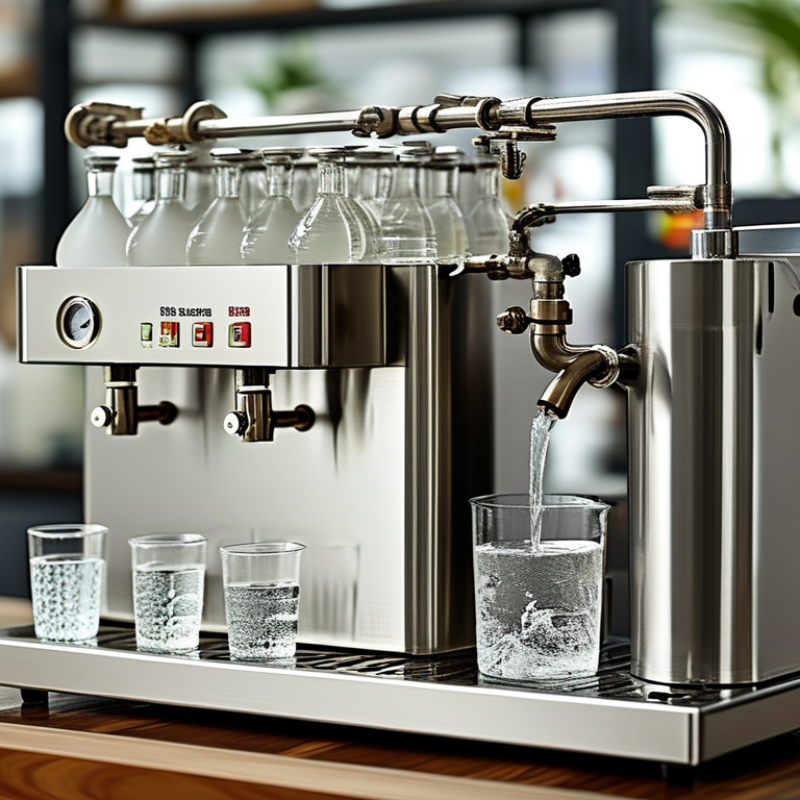
A distilled water machine works by copying part of nature’s water cycle. Inside the chamber, an electric heater raises water to boiling point. The water changes into steam, while many minerals, salts, and heavy particles remain behind. A condenser then cools the steam through metal tubing. Cleaned water drips into a separate container.
The result is usually low-mineral water, but it is not magically perfect. Some volatile compounds may travel with the steam. For this reason, a carbon filter can improve taste and reduce certain odors. In practical use, the chamber often collects white scale after several cycles. That residue shows why regular cleaning matters. I would avoid claiming that every machine produces identical water quality. Heating speed, sealing, condenser design, and filter condition all affect performance. Independent water testing gives stronger evidence than attractive product claims.
Tips: Check the chamber material, automatic shut-off, condenser design, and replacement-filter cost. Use clean feed water when possible. Empty leftover water after each cycle. Wipe the collection container daily, and descale the boiling chamber as directed. A machine that runs quietly may still waste energy, so compare its cycle time and power rating. Do not ignore small leaks. They can signal a damaged seal or poor maintenance.
What Is the Best Distilled Water Machine in China? - How Does a Distilled Water Machine Work?
A practical comparison of common distilled water machine types and their operating characteristics
| Machine Type |
Typical Output |
Typical Power |
Operating Cycle |
Main Purification Action |
Typical Water Recovery |
Best Use |
Important Consideration |
| Compact countertop distiller |
3–5 L per cycle |
700–900 W |
4–6 hours |
Boiling, evaporation, condensation, and collection |
Approximately 70–90% |
Homes, offices, laboratories, and small clinics |
Requires several hours per batch and regular removal of mineral scale |
| Automatic countertop distiller |
4–8 L per cycle |
800–1,200 W |
3.5–6 hours |
Steam distillation with automatic shut-off and cooling |
Approximately 70–90% |
Frequent household use and small-scale drinking-water production |
A carbon post-filter may be useful for reducing certain volatile odors |
| Under-sink batch distiller |
5–15 L per cycle |
1,000–2,000 W |
3–8 hours |
Thermal separation followed by condensed-water storage |
Approximately 70–90% |
Kitchens or facilities needing larger daily volumes |
Needs suitable ventilation, electrical capacity, and storage space |
| Continuous industrial distiller |
50–5,000+ L per hour |
Varies by capacity and heating method |
Continuous operation |
Multi-stage evaporation and condensation |
Often 80–95%, depending on system design |
Hospitals, pharmaceutical facilities, laboratories, and manufacturing plants |
Requires professional installation, water treatment controls, and scheduled servicing |
| Solar-assisted distiller |
Usually below 10 L per day for small systems |
Low electrical demand or none during suitable sunlight |
Dependent on sunlight and ambient conditions |
Solar heating, evaporation, and condensation |
Highly dependent on climate and collector design |
Emergency use, remote locations, and educational applications |
Output is weather-dependent and generally much lower than electric systems |
How a Distilled Water Machine Works
The machine heats feed water until it becomes steam. Most dissolved minerals, salts, and non-volatile particles remain in the boiling chamber. The steam then passes through a cooling condenser, changes back into liquid water, and is collected in a clean container.
How to Choose the Best Type
For most homes, an automatic countertop distiller offers a practical balance of capacity, operating simplicity, and purchase cost. For laboratories or industrial facilities, output capacity, material compatibility, monitoring, validation, and service support are more important than compact size.
Limitations to Consider
Distillation consumes more energy and usually operates more slowly than membrane filtration. Some volatile organic compounds may remain unless the system includes suitable vapor management or activated-carbon treatment. The boiling chamber should be cleaned regularly to control mineral scale.
Note: Capacity, power consumption, recovery rate, and cycle time are typical ranges for machine categories. Actual performance depends on feed-water quality, ambient temperature, condenser design, operating voltage, and maintenance.
How to Compare the Best Distilled Water Machines
What Is the Best Distilled Water Machine in China?
How to Compare the Best Distilled Water Machines
The best distilled water machine depends on measured performance, not attractive claims. Start with output capacity, heating speed, and energy use per litre. A household model may produce four litres daily, while a larger unit suits offices or laboratories. Check whether the water chamber uses food-grade stainless steel. Plastic parts should not contact hot water unnecessarily.
Look at the test documents. GB 5749-2022 provides China’s drinking-water quality requirements, but a low TDS reading alone does not prove safety. The WHO Guidelines for Drinking-water Quality note that water below 600 mg/L TDS is generally acceptable in taste, while levels above 1,000 mg/L may become unpleasant. Distillation can reduce dissolved minerals and many microorganisms, yet some volatile compounds may require carbon filtration. Ask for recent laboratory results from a CNAS-accredited facility.
Maintenance reveals real quality. A thick mineral layer around the heating plate means cleaning is overdue. The WHO and UNICEF JMP 2023 report states that 2.2 billion people lacked safely managed drinking water in 2022, making reliable treatment equipment important. Still, the machine is not maintenance-free. Compare filter replacement intervals, automatic shut-off, leak protection, noise, and local service response. Energy figures deserve skepticism; advertised capacity may assume ideal room temperature and voltage. Test one full cycle yourself. That detail can change the decision.
What Are the Costs, Safety Factors, and Maintenance Needs?
Choosing the best distilled water machine in China depends on running cost, safety design, and maintenance access. Household models often cost between RMB 600 and RMB 2,500. A larger tank usually increases the purchase price. It may also consume about 0.7 to 1.2 kilowatt-hours per liter. Electricity rates and daily usage change the real cost. I would not choose the cheapest unit without checking these details.
Safety deserves close attention. Look for heat protection, automatic shutoff, stable grounding, and food-contact materials. A cool-touch handle helps prevent burns in a busy kitchen. The machine should also carry appropriate Chinese compliance marks and provide clear electrical specifications. Distillation removes many dissolved minerals and microbes, but some volatile compounds may remain. An activated-carbon stage can improve protection and taste. That detail is often overlooked.
Maintenance is simple, but not optional. Hard water can leave a white mineral layer inside the boiling chamber within several days. Emptying the residue after each cycle helps. Descaling may be needed weekly in hard-water areas, or monthly elsewhere. Replace carbon filters according to test results or the instruction manual, not guesswork. Wipe the collection container with clean water and let it dry fully. Never block the ventilation area. My own buying checklist would include replacement-part prices and service availability. A low initial price can become expensive when seals, filters, or heating parts are difficult to find. Some machines are also noisier than expected. That weakness should be admitted.
What Is the Best Distilled Water Machine in China?
Estimated first-year ownership cost by daily output, including equipment, electricity, and routine consumables.
Cost assumptions
The estimate uses a typical countertop distiller price of CNY 800–1,800, electricity consumption of about 0.7–1.0 kWh per liter, and residential electricity near CNY 0.56 per kWh.
Safety factors
Prioritize food-contact stainless steel, automatic shut-off, overheat protection, a secure lid, stable ventilation, and an electrical rating suitable for the installation location.
Maintenance needs
Remove mineral scale regularly, rinse the boiling chamber after each use, clean the condenser, and replace carbon or polishing filters according to water quality and usage.
Indicative planning figures for generic household machines; actual costs vary with local electricity tariffs, water quality, capacity, and operating frequency.