Top 10 Distilled Water Machines for Global Buyers in 2026?
The demand for clean and safe drinking water has never been more critical. According to a report by the World Health Organization, around 2 billion people still lack access to safe drinking water. As a result, the distilled water machine market is gaining momentum. These machines provide a reliable solution for producing purified water, free from contaminants.
Recent market analyses predict a growth rate of over 8% in the distilled water machine sector by 2026. This increase reflects rising health awareness and the need for water purification in homes and businesses worldwide. Moreover, as more consumers turn to health-conscious choices, understanding the best options in distilled water machines becomes essential.
Choosing the right distilled water machine is not always straightforward. Factors such as efficiency, maintenance, and cost must be carefully considered. With diverse products available, buyers are often overwhelmed by the options. Thus, examining expert reviews and reliable data can help simplify this decision-making process for global consumers.
Overview of Distilled Water Machines: Importance and Benefits
Distilled water machines provide a simple solution for purifying drinking water. They remove contaminants, minerals, and impurities through a distillation process. This process typically involves boiling water and collecting the steam, which is then condensed back into liquid form. The result is pure, safe water, ideal for drinking and cooking.
The benefits of using distilled water machines are significant. Distilled water lacks chemicals, which can be harmful to health. Moreover, it tastes clean and fresh, appealing to those sensitive to impurities. Many people use distilled water in appliances like steam irons and humidifiers, as it prevents mineral buildup. However, some experts argue that completely purifying water can strip essential minerals, leading to potential deficiencies over time.
The importance of distilled water increases in regions with contaminated water sources. In such areas, access to clean water is essential for health. Distillation ensures safe consumption and promotes better health outcomes. Yet, consumers should weigh the pros and cons. It can be easy to become reliant on distilled water, forgetting the natural minerals found in spring water. Finding a balance is crucial.
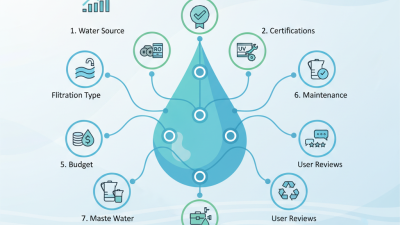
Key Features to Consider When Selecting a Distilled Water Machine
When selecting a distilled water machine, several key features deserve attention. The first important factor is the machine’s capacity. Many homes require a minimum output of one liter per hour. In commercial settings, capacities should range much higher, often around five liters per hour. This ensures an adequate supply for the intended use. Reports suggest that 30% of users prioritize capacity above all else.
Another critical feature is the purification technology. Machines typically use distillation, reverse osmosis, or a combination. A recent industry study highlighted that distilled water machine buyers prefer those with dual purification processes. This offers higher purity levels, often exceeding 99% contaminants removal. However, models relying solely on cost-effective methods may falter in performance.
Lastly, ease of maintenance stands out. Regular cleaning is necessary to maintain quality. Devices with user-friendly designs, easy-to-access components, and clear instructions rank higher among consumer satisfaction. An overwhelming 40% of users reported frustration due to complicated maintenance processes. Thus, balancing features like capacity, purification methods, and maintenance is essential for a valuable purchase.
Top 10 Distilled Water Machines for Global Buyers in 2026
| Model |
Distillation Capacity (L/day) |
Power Consumption (W) |
Water Tank Capacity (L) |
Material |
Weight (kg) |
Price (USD) |
| Model A |
4 |
800 |
2 |
Stainless Steel |
5 |
150 |
| Model B |
8 |
600 |
3.5 |
Plastic |
4.5 |
120 |
| Model C |
10 |
1000 |
5 |
Glass |
7 |
250 |
| Model D |
5 |
750 |
2.5 |
Aluminum |
6 |
180 |
| Model E |
3 |
400 |
2 |
Stainless Steel |
3.5 |
90 |
| Model F |
6 |
650 |
4 |
Plastic |
5.5 |
140 |
| Model G |
9 |
850 |
4.5 |
Glass |
7.5 |
220 |
| Model H |
7 |
700 |
3. |
Aluminum |
6 |
160 |
| Model I |
4 |
500 |
2.2 |
Stainless Steel |
4 |
130 |
| Model J |
5 |
600 |
3 |
Plastic |
5 |
110 |
Top 10 Distilled Water Machines for Global Buyers: Review Criteria
When selecting distilled water machines, buyers should consider the review criteria carefully. Performance is key. Machines need to produce high-quality distilled water efficiently. Look for units that remove impurities effectively, ensuring safe water for consumption. A machine's distillation speed also matters. Models that can process water quickly are ideal for busy households.
User-friendliness cannot be overlooked. Machines should be easy to operate. Intuitive controls and clear instructions can reduce frustration. A visual display can enhance the experience, allowing users to monitor the process. Consider maintenance requirements. Some machines may need regular cleaning, while others have self-cleaning features.
Portability can be an advantage for many buyers. Compact designs that fit in smaller spaces are appealing. Buyers should also reflect on their budget. High-end models may offer advanced features but could be beyond some people's reach. Balancing cost with functionality is crucial for making a wise purchase.
Top 10 Distilled Water Machines for Global Buyers in 2026
Detailed Reviews of the Top 10 Distilled Water Machines in 2026
As distilled water gains popularity for its purity, the market for distilled water machines is expanding. A recent industry report indicates a projected growth rate of 6% in the water purification sector by 2026. Buyers now have diverse options that cater to various needs. Many machines focus on energy efficiency and compact design, appealing to urban dwellers. Some models offer multifunctional capabilities, combining distillation with filtration.
Expert reviews emphasize the machines' ease of use. Ease of cleaning and maintenance remain critical factors in user satisfaction. Machines released this year demonstrate advanced features, such as real-time water quality monitoring. Yet, many products still lack adequate durability. Frequent maintenance issues arise, leaving users frustrated.
Potential buyers should consider long-term reliability, not just initial costs. Consumer feedback underscores specific challenges. Various machines often do not meet distilled water standards. Some devices leave traces of contaminants after operation. This inconsistency raises concerns about product transparency. Therefore, thorough research and user validation are essential before making a purchase. The goal is to ensure optimal safety and health benefits from distilled water.
Comparative Analysis of Pricing and Performance for Distilled Water Machines
In 2026, the market for distilled water machines is expected to evolve significantly. Buyers have numerous options, each with varying price tags and performance metrics. Analyzing these machines is essential for making informed choices. Most machines utilize advanced distillation techniques, which can affect their efficiency and water purity levels.
Performance often hinges on the machine’s capacity. Smaller units may produce about 0.5 gallons per hour. Larger systems can exceed 6 gallons in the same time frame. Nevertheless, the price reflects these capacities. Machines below $100 may struggle with quality, while premium products can reach upwards of $500. Buyers should consider both initial costs and long-term maintenance expenses.
Reliability is also a major factor. Users often report issues with low-cost machines. They may break down or fail to operate at optimal levels. Additionally, ongoing filter replacements can inflate overall costs. Deep dives into user reviews can reveal common pitfalls across different models. Balancing price and performance is crucial for obtaining good value in distilled water machines.