10 Essential Tips for Choosing the Best Purified Water System for Your Home
Choosing the right purified water system for your home can be overwhelming. There are many options, each claiming to provide the best quality water. Understanding the different features is crucial for making an informed decision. This investment affects your health and well-being, so it deserves careful consideration.
The ideal purified water system should meet your specific needs. Factors such as filtration method, capacity, and maintenance are key. Knowing your water quality is the first step. You might have hard water or contaminants that need addressing. This makes it vital to research the systems available.
Don’t rush into your purchase. Take time to compare various options. User reviews can provide insights, revealing both strengths and limitations. A reliable product will offer peace of mind and improve your quality of life. Remember, the best choice is the one that fits your lifestyle and ensures safe, clean drinking water.
Understanding the Different Types of Purified Water Systems Available
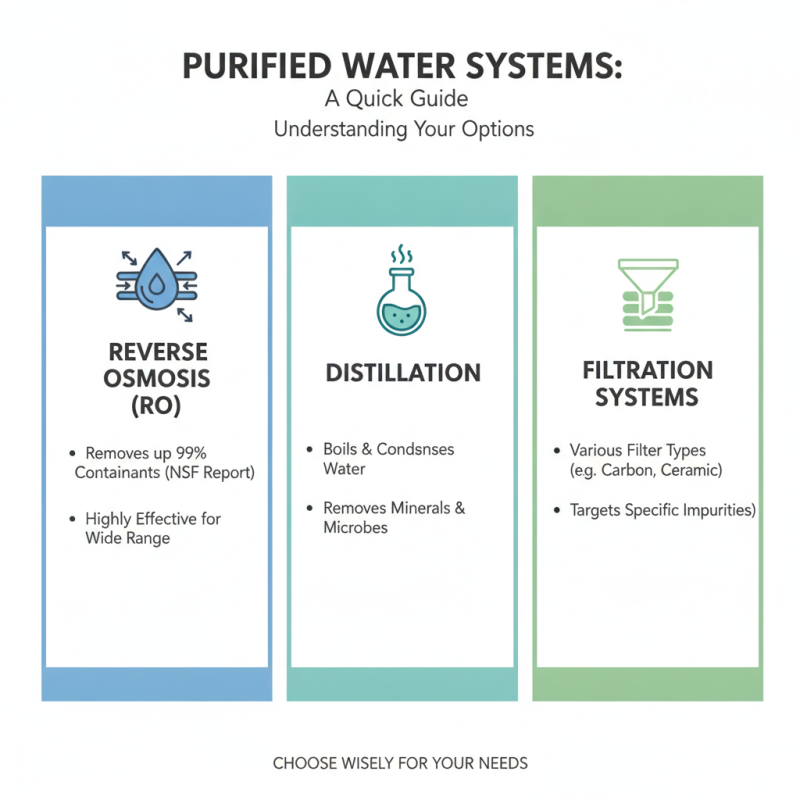
When choosing a purified water system, it's crucial to understand the different types available. There are mainly three types: reverse osmosis (RO), distillation, and filtration systems. Each has its merits and drawbacks. For instance, a report by the National Sanitation Foundation highlights that RO systems remove up to 99% of contaminants, making them highly effective.
An essential tip is to consider your water source. If your tap water has high levels of minerals, an RO system may be the right choice. However, these systems can waste three gallons of water for every gallon purified. It's a point worth pondering if efficiency is a concern.
Another option is distillation. This process heats water to create steam, eliminating impurities. According to the Environmental Protection Agency, distillation can effectively eliminate heavy metals. However, it might not remove certain volatile organic compounds. It’s important to assess your water quality reports to make the best decision.
Lastly, filtration systems, such as activated carbon, can be more affordable and easier to maintain. They are great for taste improvement but may not provide comprehensive purification. Take your time to research and identify the particular needs of your home. Each system has trade-offs that you need to weigh carefully.
Assessing Your Household Water Quality and Needs
Assessing your household water quality is a crucial step in choosing the right purified water system. Start by examining the source of your water. Is it municipal or well water? Each type may have different contaminants. Conducting a water test will help identify chlorine, lead, or microbial issues. Specific tests target heavy metals, bacteria, and pH levels. Understanding these factors can guide your selection.
Next, consider your household's specific needs. How many people live in your home? Do you have pets or children? This will affect the amount of filtered water required. Some people may need a system capable of handling larger volumes. Evaluate your lifestyle as well. If you consume large amounts of bottled water, a robust system could reduce waste and save money. Reflect on your unique situation to ensure you choose a system that fits seamlessly into your daily routine.
Key Features to Look for in a Purified Water System
When selecting a purified water system, it's essential to focus on key features that ensure safety and quality. One crucial factor is the filtration technology used. Reverse osmosis systems, for instance, can remove up to 99% of contaminants, according to the U.S. Environmental Protection Agency. Activation of carbon filters is also important, as they target specific impurities like chlorine and volatile organic compounds.
Another aspect to consider is the system's capacity. The average American family consumes about 300 gallons of water monthly, according to industry reports. A system needs to meet this demand without constant replacement of filters.
Ease of maintenance can significantly impact long-term usability. Many systems require less frequent filter changes, saving both time and money. Systems with clear indicators for filter replacements can simplify upkeep. However, potential buyers should reflect on their actual water consumption. Some households may overestimate their needs, leading to unnecessary expenses and maintenance challenges.
Comparison of Different Types of Purified Water Systems
Evaluating System Maintenance and Replacement Costs
When selecting a purified water system, understanding maintenance and replacement costs is crucial. Regular upkeep ensures the system functions efficiently, providing clean water. Filter changes, system cleaning, and component replacements are part of this equation. Often, costs can skyrocket if ignored. Some systems require more frequent filter replacements, leading to unexpected expenses.
Consider how your family's water consumption impacts maintenance. A larger household tends to use more water, necessitating more frequent maintenance. Some users may underestimate how often they need to change filters. A good rule of thumb is to track usage. Keep records of when maintenance was performed. This practice can prevent lapses that compromise water quality.
Don't overlook the long-term costs. Initial purchase prices can be alluring, but they don’t tell the whole story. A lower-priced system may result in higher expenses over time. Research and compare different systems carefully. Think about reliability and longevity, too. Sometimes, paying a little more upfront can save money in the long run.
Reviews and Recommendations: Choosing a Reliable Brand
When choosing a purified water system, reliability is crucial. Many homeowners overlook the importance of brand reputation. Research shows that 70% of consumers trust established brands. This trust often stems from years of consistent product quality and customer service. Reviews from industry experts frequently highlight systems with certifications from reputable organizations, a significant indicator of reliability.
Consumers should also be aware of performance data. According to a report by the Water Quality Association, effective water systems reduce contaminants by 90-99%. This is essential for ensuring safe drinking water. However, numbers can vary widely between brands, leading to potential confusion. An informed choice involves scrutinizing certifications and performance data.
It's essential to balance price and quality. Some higher-priced systems may offer advanced filtration features, yet not all consumers need these luxuries. Buyers sometimes gravitate towards cheaper options but later regret this decision due to unsatisfactory performance. Reflecting on what is truly needed can guide a more informed purchase. A thorough comparison of different filtered water systems will enhance overall satisfaction and may prevent future regrets.
10 Essential Tips for Choosing the Best Purified Water System for Your Home
| Tip |
Description |
Important Features |
Price Range |
| 1. Assess Water Quality |
Test your water to determine contaminants and choose a system that addresses your specific needs. |
Contaminant Removal |
$50 - $200 |
| 2. Compare Filtration Methods |
Research various systems such as reverse osmosis, carbon filters, and UV purification. |
Filtration Efficiency |
$100 - $500 |
| 3. Look for Certifications |
Choose systems certified by reputable organizations to ensure effectiveness and safety. |
NSF/ANSI Standards |
$75 - $300 |
| 4. Evaluate System Size |
Consider how much space you have for installation and the system's capacity. |
Footprint and Output |
$80 - $400 |
| 5. Maintenance Requirements |
Understand the upkeep needed for the system, including filter replacement schedules. |
Filter Lifespan |
$50 - $150/year |
| 6. Installation Options |
Decide whether you will install the system yourself or hire a professional. |
DIY vs. Professional |
$0 - $250 |
| 7. Water Taste |
Choose a system that improves the taste and odor of your water. |
Taste/Odor Improvement |
$100 - $300 |
| 8. Local Water Quality |
Research your area's water quality reports to inform your choice. |
Regional Considerations |
$50 - $200 |
| 9. Customer Reviews |
Look for feedback from existing users to gauge satisfaction and reliability. |
User Experience |
N/A |
| 10. Warranty and Support |
Check warranty terms and the availability of customer support. |
Warranty Duration |
N/A |