How to Choose the Best Purified Water System for Your Home?
Choosing the right Purified Water System for your home requires careful consideration. Many options are available, and each offers unique benefits. You might feel overwhelmed by choices. However, understanding your water needs can guide you in making a sound decision.
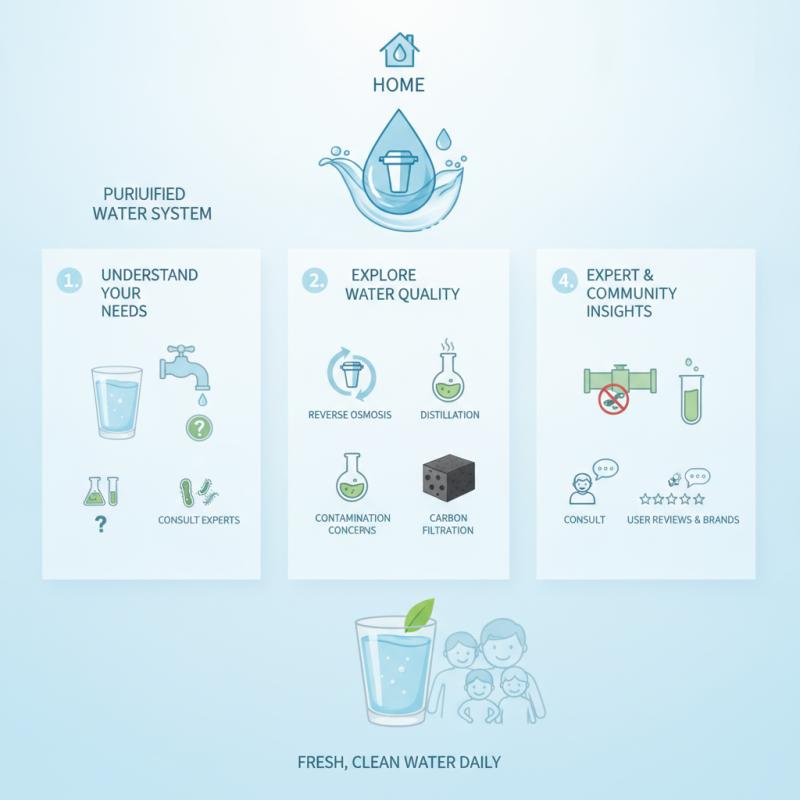
A Purified Water System enhances both taste and safety. With varying technologies like reverse osmosis, distillation, and carbon filtration, it's crucial to explore what suits your household best. Take into account the quality of your current water supply. If contamination is a concern, investing in a reliable system becomes essential.
Consulting with experts can further clarify your options. They provide insights that go beyond simple specifications. Consider user reviews and reputable brands to build your confidence in the choice you make. Ultimately, finding the best Purified Water System for your home will ensure you enjoy fresh, clean water daily.
Factors to Consider When Choosing a Purified Water System for Home Use
Choosing the right purified water system for your home can feel overwhelming. There are many factors to consider. Water quality varies by location, so an initial water test is crucial. This reveals contaminants like heavy metals or bacteria. Understanding these elements helps narrow down suitable purification methods.
Another important factor is the system's capacity. Consider your household size and water consumption. A small family may not need a high-capacity system. However, larger households could require more robust solutions. Efficiency matters too; look for systems that balance purification ability with water waste.
Installation and maintenance are often overlooked. Some systems are complex and may need professional installation. Regular filter changes are vital for performance. Neglecting this can lead to poor water quality. Overall, weighing these elements thoughtfully can guide you to a system that best fits your needs.
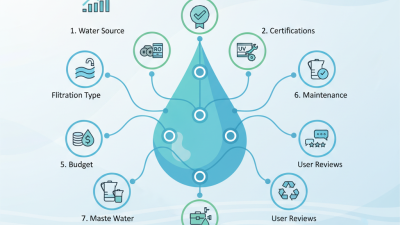
Factors Considered in Choosing a Purified Water System
Types of Purified Water Systems: Reverse Osmosis, Distillation, and More
Choosing the right purified water system is crucial for health. Many options exist, but three main types stand out: reverse osmosis, distillation, and carbon filtration. Each comes with unique benefits and downsides.
Reverse osmosis uses a semipermeable membrane. It effectively removes contaminants. However, it can waste water. The system might also strip minerals, which are vital for health. Balancing mineral content is essential.
Distillation boils water, turning it into steam. This process kills bacteria and removes impurities. Yet, it can be slow and uses energy. Carbon filtration, on the other hand, improves taste and reduces chlorine. But it may not eliminate all harmful contaminants. Understanding trade-offs is vital in making a choice.
How to Choose the Best Purified Water System for Your Home?
| System Type |
Description |
Pros |
Cons |
Cost Range |
| Reverse Osmosis |
Uses a semipermeable membrane to remove contaminants. |
Highly effective for most contaminants, improves taste. |
Requires regular maintenance, wastewater generation. |
$150 - $500 |
| Distillation |
Boils water and collects the steam to remove impurities. |
Effective against many contaminants, simple technology. |
Slow process, retains some harmful chemicals. |
$100 - $300 |
| Activated Carbon |
Uses carbon to adsorb impurities and improve taste. |
Improves taste and odor, affordable and easy to install. |
Not effective against all contaminants, needs frequent replacement. |
$50 - $200 |
| Ultraviolet (UV) Purification |
Uses UV light to disinfect water by killing bacteria and viruses. |
Effective against biological contaminants, chemical free. |
Does not remove chemical contaminants, requires electricity. |
$100 - $400 |
Understanding Water Contaminants: What Needs to be Removed for Safety
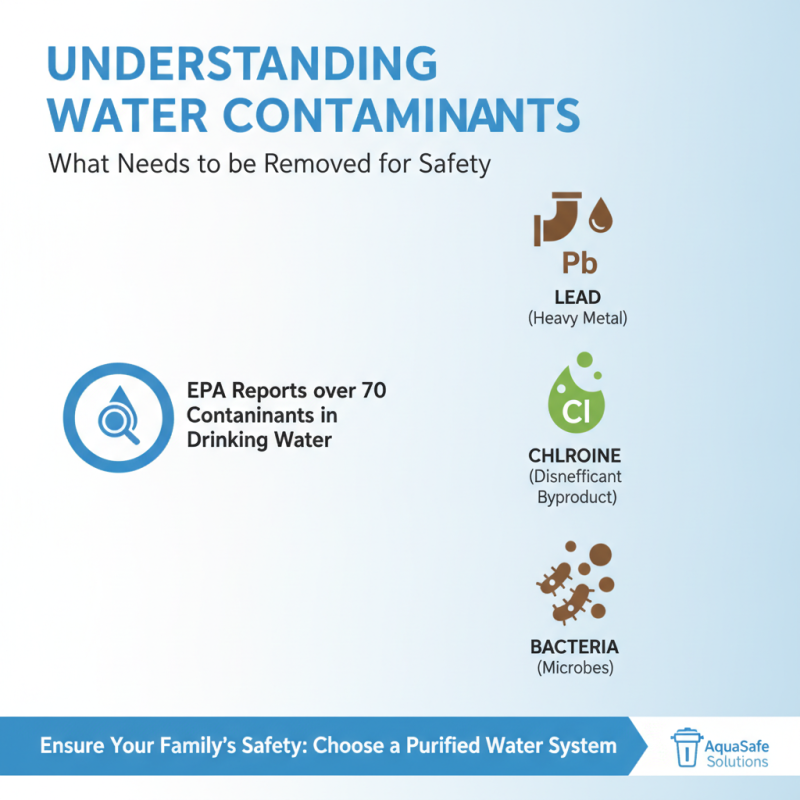
When choosing a purified water system for your home, understanding water contaminants is essential. The Environmental Protection Agency (EPA) reports that over 70 contaminants can be found in drinking water. This includes lead, chlorine, and bacteria. Knowing what to remove helps ensure safety.
Lead can enter water through old plumbing. Even low levels of lead in water may affect child development. Bacteria can cause gastrointestinal illnesses. It's crucial to test your water for these contaminants before deciding on a purification method.
**Tips**: Regular testing is vital. Consider home test kits to monitor water quality.
Chlorination, while effective, may lead to harmful byproducts. These byproducts include trihalomethanes, which the EPA warns can pose serious health risks. A carbon filter can help reduce these contaminants.
**Tips**: Look for systems that provide multi-stage filtration. They tend to remove more pollutants effectively.
Evaluating Flow Rates and Capacity for Household Water Purification Needs
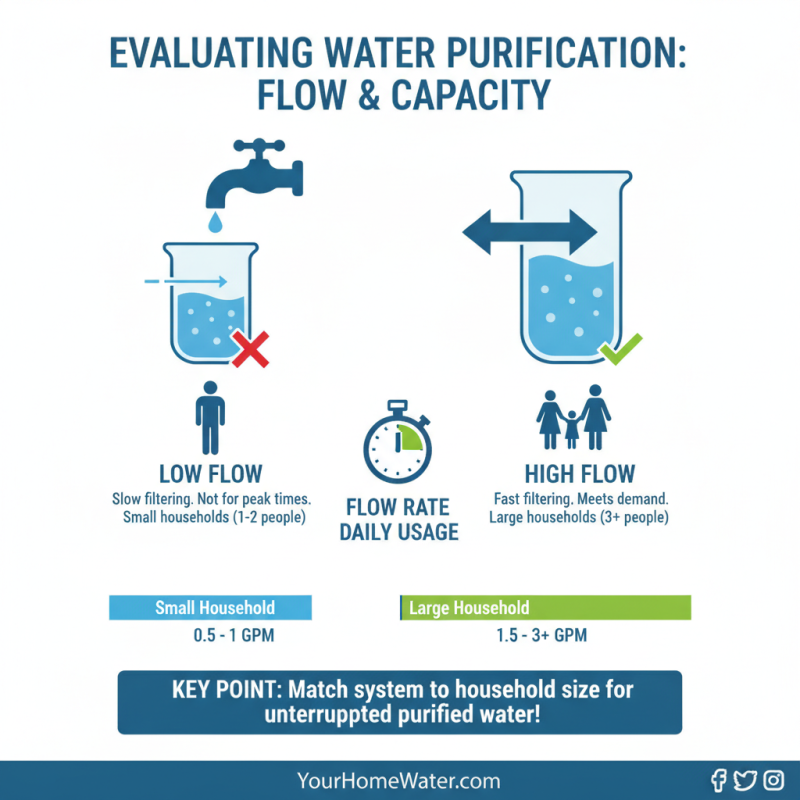
When selecting a purified water system, it is crucial to evaluate flow rates and capacity. Flow rate indicates how quickly water is filtered, impacting daily usage. A system with a low flow rate may not meet your household's needs, especially during peak times. Consider the number of people in your home. If you have a large family, a higher flow rate is essential.
Capacity is equally important. It determines how much water a system can filter before requiring maintenance or replacement of filters. Many systems list this capacity in gallons. A smaller capacity might be sufficient for occasional use, but regular users need a system that can handle larger volumes. This allows for uninterrupted access to clean water.
Reflect on your lifestyle and habits. Are you using more water for cooking, cleaning, or hydration? The answer will guide your choices. A mismatch between your needs and the system can lead to frustrations. Inefficiencies can arise if the system can’t keep up with your consumption or if it requires constant filter changes. Balancing flow rates and capacity helps ensure you have an effective solution.
Cost Analysis: Initial Investment vs. Long-term Operation and Maintenance
When choosing a purified water system, understanding costs is crucial. The initial investment can vary widely. A reverse osmosis system may cost around $200 to $1,000. In contrast, UV systems often range from $300 to $600. Hidden expenses, like installation fees, can add $100 or more.
Long-term operation and maintenance can impact your overall budget significantly. Average maintenance costs for water systems can range from $50 to $200 annually. Replacing filters may be necessary every six months or annually, depending on usage. This could incur additional costs of $100 or more per year. You can save in the long run by choosing high-efficiency models that require less frequent maintenance.
Tips: Always check for energy efficiency ratings. Systems that use less energy can result in lower utility bills. Consider your water quality needs. Understanding localized contamination can prevent overspending on unnecessary features. Research the warranty and support options, as they add value and assurance to your investment. Balancing immediate costs and ongoing expenses can lead to smarter, more sustainable choices for your home.