

Leave Your Message

2026 Best Complete RO Machine for Global Buyers?

Choosing the 2026 Best Complete RO Machine for Global Buyers requires more than comparing membrane ratings. A serious evaluation must examine water chemistry, daily demand, energy use, maintenance access, and local operating conditions. A coastal hotel may need corrosion-resistant components and pretreatment for brackish feedwater. A small factory may need stable flow, simple controls, and dependable replacement parts.

Professor Menachem Elimelech, a leading membrane-treatment researcher, has emphasized that “desalination is not a silver bullet.” That warning matters when assessing any Complete RO Machine. Reverse osmosis can reduce dissolved salts, metals, and other contaminants, but it cannot correct every water problem alone. Poor pretreatment may foul the membrane quickly. Incorrect sizing may create waste, unstable pressure, or disappointing output.

Details matter.

This guide compares complete systems through a practical global-buying lens. It considers membrane quality, pump efficiency, recovery rate, automation, monitoring instruments, installation requirements, and after-sales support. It also asks harder questions. Can the supplier provide verified test data? Are replacement filters available in the buyer’s region? Does the quoted capacity reflect real feedwater conditions or a laboratory estimate?

There is no perfect machine. Some specifications remain unclear. Vendor claims can also look stronger than field performance. Therefore, buyers should request water analysis, independent certifications, warranty terms, and documented commissioning support before placing an order. The best Complete RO Machine is not simply the largest or most automated unit. It is the system that delivers safe, consistent water with manageable operating costs and realistic technical support.
2026 Best Complete RO Machine for Global Buyers?

What Defines a Complete RO Machine in 2026

2026 Best Complete RO Machine for Global Buyers?

What Defines a Complete RO Machine in 2026

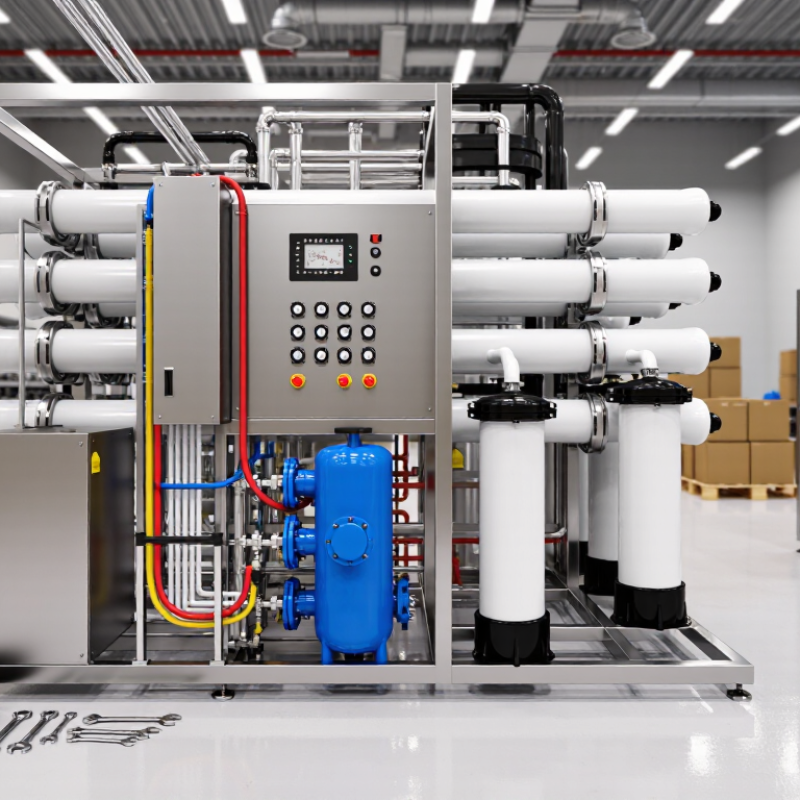
A complete RO machine is more than a membrane vessel and a high-pressure pump. It should include sediment and carbon pretreatment, pressure gauges, flow meters, automatic controls, post-treatment, sanitation access, and safe drainage.

The WHO/UNICEF Joint Monitoring Programme reported that 2.2 billion people lacked safely managed drinking water in 2022. This gap makes reliable treatment essential, especially where feedwater quality changes daily.

Real performance needs measurable details. Buyers should check permeate flow, salt rejection, recovery rate, energy use, feed pressure, temperature range, and cleaning requirements. A machine producing clear water may still fail if its membrane fouls quickly. It happens more often than brochures admit.

Pretreatment design should match local hardness, iron, turbidity, and biological risk. The U.S. EPA’s Water Reuse Action Plan also emphasizes monitoring, risk management, and operational control across treatment systems.

Therefore, a complete unit needs alarms, sampling ports, maintenance records, spare-part planning, and operator training. It should support regional electrical standards and documented compliance requirements.

A compact cabinet is useful, but accessibility matters more. Some systems look advanced, yet technicians cannot reach the filters without removing half the enclosure. That is not complete engineering.

The better choice balances verified output, practical maintenance, transparent data, and honest limits.
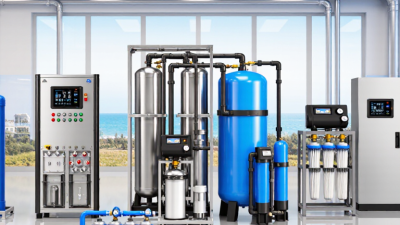
How Complete RO Systems Work from Source Water to Pure Water

2026 Best Complete RO Machine for Global Buyers?

How Complete RO Systems Work from Source Water to Pure Water

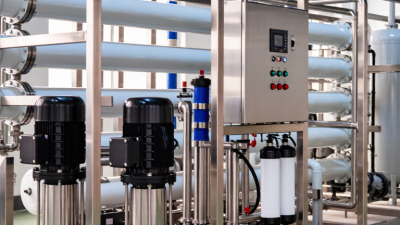
A complete reverse osmosis system treats water through several controlled stages. Source water first enters a sediment filter, which catches sand, rust, and visible particles. A carbon filter then reduces chlorine, odors, and some organic compounds. This protection matters because chlorine can damage the thin-film membrane. The high-pressure pump pushes pretreated water across that membrane. Its tiny pores reject many dissolved salts, metals, microbes, and other contaminants. Permeate becomes purified water, while concentrated reject water leaves through a separate line. The World Health Organization’s Guidelines for Drinking-water Quality stress that treatment performance depends on source conditions, maintenance, and verification. A machine is never “complete” without testing.

Data gives useful context. The UN World Water Development Report 2024 estimated that 2.2 billion people lacked safely managed drinking water in 2022. RO can help, but it does not solve every water problem. It may waste water, require electricity, and perform poorly when filters are neglected. I have seen systems fail because operators trusted the display more than laboratory results. That is an uncomfortable lesson. Buyers should check recovery rate, membrane capacity, feed pressure, and replacement intervals. The system should also include pressure gauges, automatic flushing, leak protection, and a clear reject-water route.

Tips: Test feed water before selection. Compare TDS before and after treatment. Replace filters by measured condition, not habit alone. Keep a service log. Even a good design needs honest monitoring.

Key Specifications Global Buyers Should Compare

2026 Best Complete RO Machine for Global Buyers?

Key Specifications Global Buyers Should Compare

A complete reverse osmosis machine should match local water conditions, not only advertised capacity. The WHO/UNICEF Joint Monitoring Programme reported that 2.2 billion people lacked safely managed drinking water in 2022. Feedwater quality can vary sharply between cities, wells, and coastal facilities. Buyers should check operating pressure, inlet TDS, temperature range, turbidity limits, and pretreatment requirements.

Compare permeate flow, recovery rate, salt rejection, and energy use under the same test conditions. A higher capacity may produce more wastewater. A lower recovery rate may protect membranes but raise operating costs. NSF/ANSI 58 covers material safety, structural integrity, and contaminant reduction for residential RO systems. For industrial equipment, request independent laboratory results and a complete performance curve. Do not rely on one impressive percentage. Field water is rarely perfect.

Tips: Ask for a factory test report, membrane replacement schedule, pump noise data, and spare-part availability in your region. Confirm whether the stated flow uses 25°C water. Cold water can reduce output noticeably. Also check electrical compatibility, since voltage and frequency differ across markets. A 50 Hz pump may not suit every installation. This detail is easy to miss. I have seen buyers compare liters per day while ignoring pretreatment and maintenance access. That comparison looks efficient, but it can fail quickly in practice.

Choosing RO Machines for Different Water Sources and Applications

2026 Best Complete RO Machine for Global Buyers?

Choosing an RO machine starts with the water source, not the equipment catalog. Municipal water usually needs sediment filtration, carbon treatment, RO membranes, and final disinfection. Well water may require iron, manganese, hardness, or arsenic control before the membrane. Surface water demands stronger pretreatment because turbidity and microbes can change quickly.

The WHO Guidelines for Drinking-water Quality set 10 μg/L for arsenic and 50 mg/L for nitrate. These limits make laboratory testing essential. One sample is not enough.

Seawater RO requires high-pressure pumps and corrosion-resistant components. The International Desalination Association reports that modern seawater RO commonly uses about 3–4 kWh per cubic meter, depending on site conditions. Brackish-water systems generally consume less energy, but their recovery rate depends on salinity and scaling risk.

For food processing, choose sanitary piping and stable post-treatment. For laboratories, add polishing and continuous conductivity monitoring.

For hotels, hospitals, or remote communities, include storage, automatic flushing, alarms, and service access.

A “complete” machine without reliable pretreatment is incomplete in practice. That assumption fails.

Tips:

Match membrane capacity to peak demand, not average demand. Check seasonal water tests and reject-water rules before buying. The WHO and UNICEF JMP reported that 2.2 billion people lacked safely managed drinking water in 2022, so local maintenance capacity matters. Keep spare seals and filters available. A perfect specification rarely exists; field data may change the decision.

Installation, Maintenance, Compliance, and Total Ownership Costs

The best complete RO machine for global buyers is not the system with the highest membrane rating. It is the system that remains compliant, serviceable, and economical after installation. WHO and UNICEF’s Joint Monitoring Programme 2023 reported that 2.2 billion people lacked safely managed drinking water in 2022. This pressure increases demand for dependable treatment, but local water analysis still matters more than sales specifications.

Installation should begin with feed-water testing, including hardness, iron, silica, turbidity, TDS, and microbial risk. Pretreatment must match those results. A poorly sized sediment filter can shorten membrane life and raise operating costs. The UN World Water Development Report 2024 notes that agriculture uses roughly 70% of global freshwater withdrawals. Therefore, recovery and reject-water planning deserve serious attention, especially in water-stressed regions. The machine should also document pressure, flow, conductivity, and recovery during commissioning. Certification to standards such as NSF/ANSI 58 can support confidence, but it does not replace local electrical, plumbing, or import requirements.

Tips: Calculate total ownership costs over five years. Include electricity, cartridges, membranes, labor, laboratory testing, reject-water handling, and downtime. Replace parts by measured performance, not habit. I have seen maintenance schedules look perfect on paper while conductivity slowly rises unnoticed. That is a useful warning. Remote monitoring helps, but trained operators still need to inspect leaks, seals, dosing equipment, and abnormal pressure changes. A spreadsheet may estimate savings beautifully. Real sites can disagree.

2026 Best Complete RO Machine for Global Buyers

Five-year total ownership cost comparison by system capacity, including equipment, installation, maintenance, compliance, and operating consumables.

Planning benchmark in USD for non-branded commercial RO systems. Assumptions: 5-year ownership, 365 operating days per year, regular prefilter and membrane replacement, routine water-quality testing, and typical industrial electricity and water costs. Actual costs vary by feed-water quality, local labor, discharge requirements, duty cycle, and regulatory testing.