

Leave Your Message

How to Choose the Best Borehole Filters in China?

Choosing the right Borehole Filters in China starts below ground, where water chemistry, soil layers, and pumping conditions shape performance. A filter that works well in coarse gravel may clog quickly in fine sand. The difference can be seen in a simple field check: compare the borehole log, water samples, and screen specifications before approving a design. Small details matter.

China’s varied geology makes local conditions especially important. Ask suppliers for material grades, slot-size tolerances, corrosion-resistance data, and documented quality checks. Stainless steel, PVC, and other filter materials each suit different water conditions and operating needs. Do not rely on a low price or a broad “suitable for all wells” claim. Request evidence tied to the intended site, and confirm that the filter can be installed and maintained with available equipment. A precise specification is useful; it is not a guarantee of long service life.

A credible expert quotation requires a verifiable source. No source materials or confirmed expert statement were provided for this topic, so attributing a quotation to a named specialist would risk misleading readers. This guide instead focuses on practical selection criteria: matching screen openings to formation samples, checking construction quality, and comparing supplier documentation. Even then, uncertainty remains. Ground conditions can change across a short distance, and a careful selection process cannot remove every risk.
How to Choose the Best Borehole Filters in China?

Understanding the Role of Borehole Filters in Well Construction

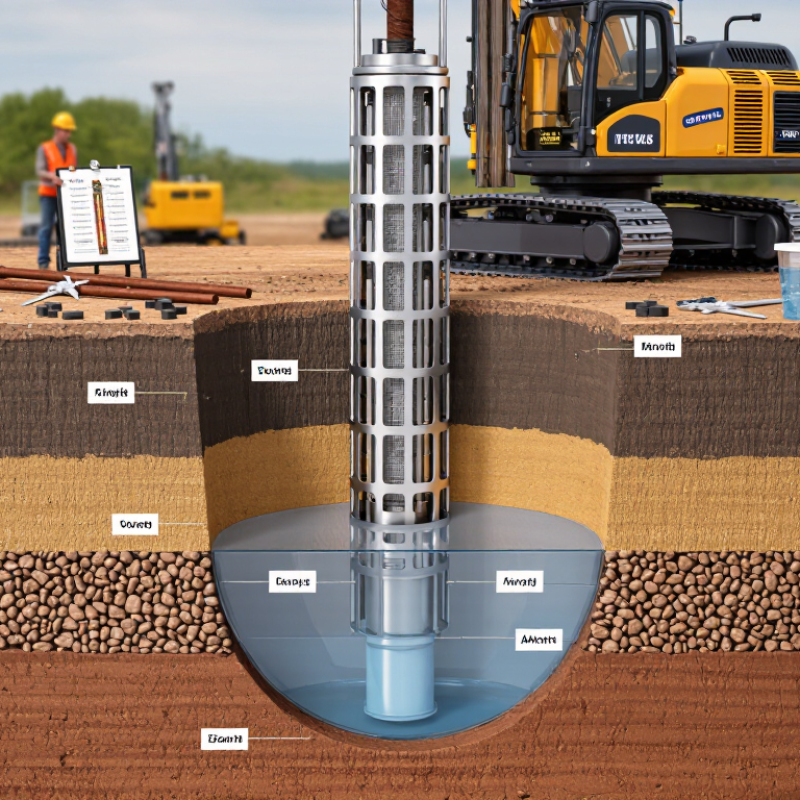
Borehole filters are not simply screens placed at the bottom of a well. They control how groundwater enters the casing while limiting sand movement. A properly selected filter supports stable pumping, clearer water, and longer equipment life. An unsuitable one can clog quickly or allow fine particles into the system.

Filter design should begin with site evidence. A qualified hydrogeologist examines drilling records, groundwater levels, and formation samples. Sieve analysis helps determine the correct slot size and gravel-pack range. The filter must retain the surrounding gravel without restricting flow too severely. Stainless steel or other corrosion-resistant materials may suit aggressive groundwater, but material selection depends on chemistry and budget.

Small details matter. The screen should cover the productive water-bearing layer, not every drilled section. Installation must prevent damage, uneven placement, and gaps in the gravel pack. Well development then removes drilling debris and loose particles. Field teams should test turbidity, yield, and drawdown after installation. Local construction standards and water-quality requirements also deserve review.

A perfect calculation does not guarantee a perfect well. Formation layers can change within a short distance, and samples may be incomplete. For this reason, experienced contractors leave room for inspection and adjustment. Regular monitoring can reveal gradual clogging before the pump begins struggling. Clear records make future maintenance safer and more predictable.
Assessing Local Geology, Aquifer Conditions, and Water Needs

Choosing the best borehole filter in China starts with the ground, not the catalogue. Local geology controls screen design, sediment load, and corrosion risk. A sandy coastal aquifer may need fine slots and a carefully graded gravel pack. Fractured limestone may require a different intake arrangement. UNESCO’s World Water Development Report 2022 states that groundwater supplies nearly half of global drinking water and about 25% of total water withdrawals. That importance demands site-specific testing.

Review drilling logs, grain-size analysis, static water levels, and pumping-test results before selecting screen openings. A practical field approach is to size the slot around the formation’s effective grain size, then confirm performance through step-drawdown and sand-production tests. Do not rely on visual clarity alone. Water can look clean while carrying arsenic, fluoride, iron, manganese, or salinity. The WHO Guidelines for Drinking-water Quality identify 0.01 mg/L as the guideline value for arsenic and 1.5 mg/L for fluoride. China’s GB 5749-2022 should also guide testing and treatment decisions.

Water demand changes the design. Household wells need stable flow and safe chemistry. Irrigation wells may tolerate different mineral levels, but excessive sand can damage pumps and clog emitters. Agricultural demand can also lower aquifer levels during dry seasons. That risk is easy to underestimate. In my experience, a slightly larger screen is not automatically better; excessive open area can invite formation collapse. Recheck the design after development, because field conditions often contradict the first geological interpretation.

Comparing Filter Materials, Slot Sizes, and Screen Designs

Selecting borehole filters in China requires more than choosing stainless steel or plastic. The UNESCO World Water Development Report 2022 states that groundwater supplies nearly half of global drinking water and about 40% of irrigation. That pressure makes screen design a practical reliability issue.

Filter material should match water chemistry, temperature, and expected service life. Stainless steel offers strong mechanical resistance, while engineered plastic can suit less aggressive water and reduce cost. PVC is not automatically suitable. Test pH, chloride, iron, and sand conditions before specifying it. AWWA A100-20 recommends designing wells around aquifer conditions, not standard catalogue sizes.

Slot size controls both yield and sand entry. A 0.5 mm slot may work in fine, well-graded sand, but it can clog in iron-rich formations. Larger slots may improve flow, yet they can allow damaging particles through. Grain-size analysis should guide the opening, with filter-pack grading checked against the screen slot. ASTM D5092 also emphasizes documenting subsurface conditions and construction details.

Screen design matters too. Continuous-slot screens provide a larger open area than many bridge-slot designs, while louvered screens may be easier to source locally. The choice affects entrance velocity, development time, and maintenance. Some specifications still copy older projects without reviewing new drilling data. That is a weak habit. In China’s varied aquifers, pilot testing and post-development turbidity checks are safer than relying on appearance alone.

Checking Chinese Standards, Supplier Quality, and Product Certifications

How to Choose the Best Borehole Filters in China?

Chinese standards should be your first quality checkpoint. Ask suppliers which current GB or GB/T standards apply to the filter, material, welding, and testing process. Do not accept a standard number without its full title and publication year. Requirements can differ for stainless steel, PVC, and other materials. Check whether the supplier follows an approved technical specification when no single standard covers the complete product.

Supplier quality requires evidence, not confident promises. Request factory photos, production records, material certificates, and traceability for each batch. Inspect slot width, pipe diameter, weld consistency, and surface finish. Small slot variations can affect sand control and water flow. A factory audit is useful. It is not perfect. Production conditions may change after the visit.

Product certifications deserve careful reading. Confirm the certificate holder, product model, testing scope, issuing laboratory, and expiry date. ISO 9001 can show a quality management system, but it does not prove every filter performs well. Ask for recent test reports covering pressure, corrosion resistance, dimensional accuracy, and filtration performance. Independent laboratory results carry more weight than internal documents. Compare samples before placing a large order. Some suppliers may provide excellent samples but inconsistent bulk production, which is an uncomfortable risk worth checking.

Planning Filter Installation, Development, and Long-Term Maintenance

How to Choose the Best Borehole Filters in China?

Planning Filter Installation, Development, and Long-Term Maintenance

Choosing a borehole filter begins with the aquifer, not the catalogue. In China, formations can change sharply between nearby sites. Grain-size analysis should guide screen slot selection and gravel-pack design. Guesswork may save time during ordering, but it can increase sand production later.

Keep the screen centered and protect it from damage during installation. A properly graded gravel pack should surround the screen evenly. Fine particles can block flow if the pack is contaminated. Development should remove drilling mud and loose sediment. Surging, airlifting, or controlled pumping may be suitable, depending on formation stability. Continue until water clarity, sand content, and discharge readings become stable. Do not trust appearance alone.

Long-term maintenance needs clear records. Log pumping rates, water levels, turbidity, and pressure changes after each inspection. Compare new readings with the original baseline. A gradual yield loss may indicate clogging, incrustation, or aquifer changes. Clean the filter only after identifying the likely cause. Aggressive treatment can damage the screen or disturb the gravel pack. This is where plans often prove imperfect. Local geology may behave differently than predicted. Regular sampling and advice from qualified groundwater professionals allow the maintenance schedule to improve with evidence.